




Park Directory
View All Parks in Genesee
Visitor's Center Hours
Open 9:00am – 5:00pm
Map
Printable Map
Grounds
8am – Sunset Daily
Note
For-Mar is a pet and smoke-free facility.
Site Key


Here you will find information about Blanding’s turtles at For-Mar Nature Preserve and how For-Mar has collaborated with the University of Michigan – Flint to study and manage the turtles in the park! Explore the different pages to see information about their biology and how to identify them, their conservation challenges, licensed turtle rehabilitators, ongoing Blanding’s turtle research at For-Mar, and places to look for them in the park! There is even a little information about other turtles you might find at For-Mar Nature Preserve too!
ALL ABOUT BLANDING’S TURTLES
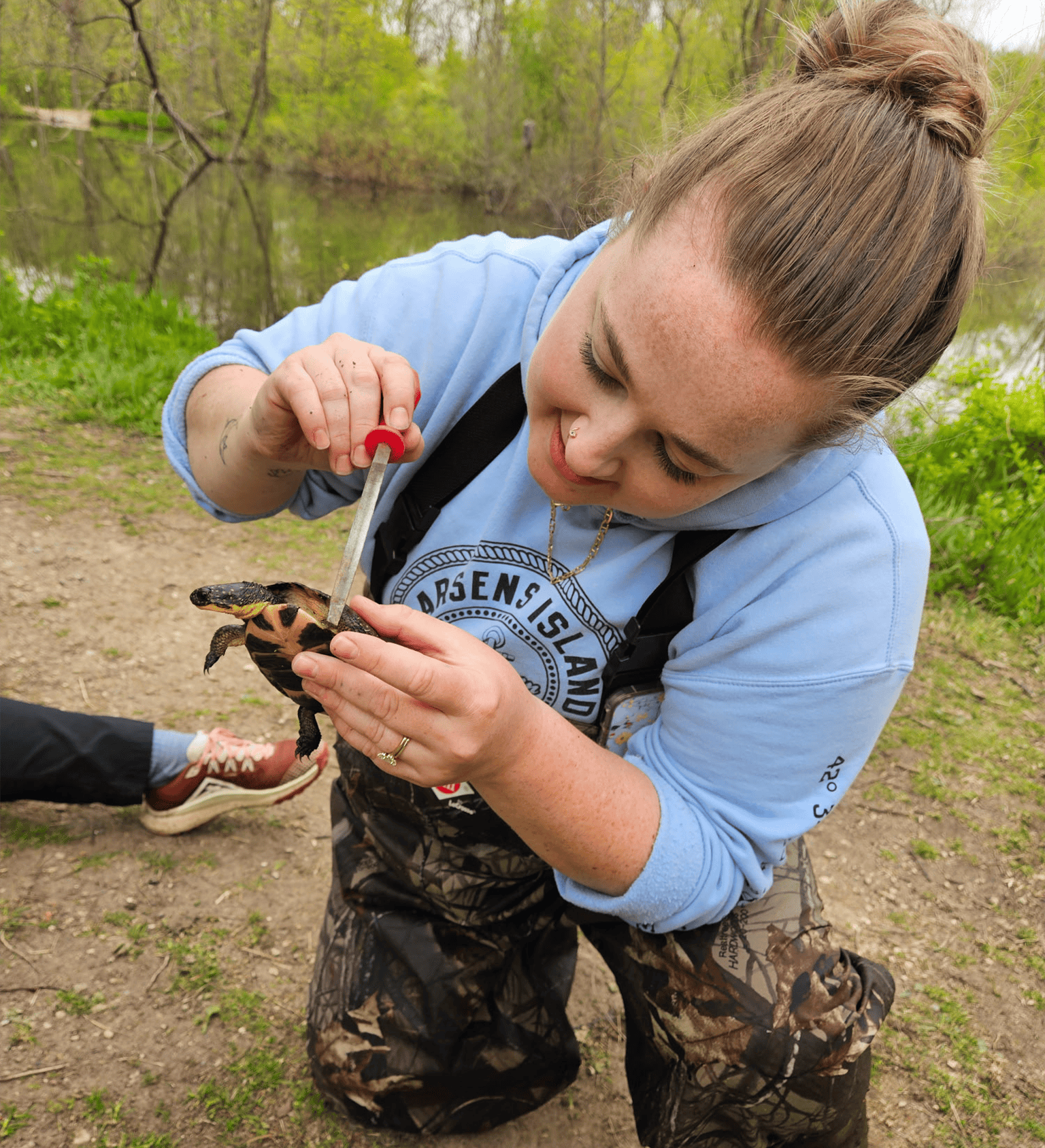
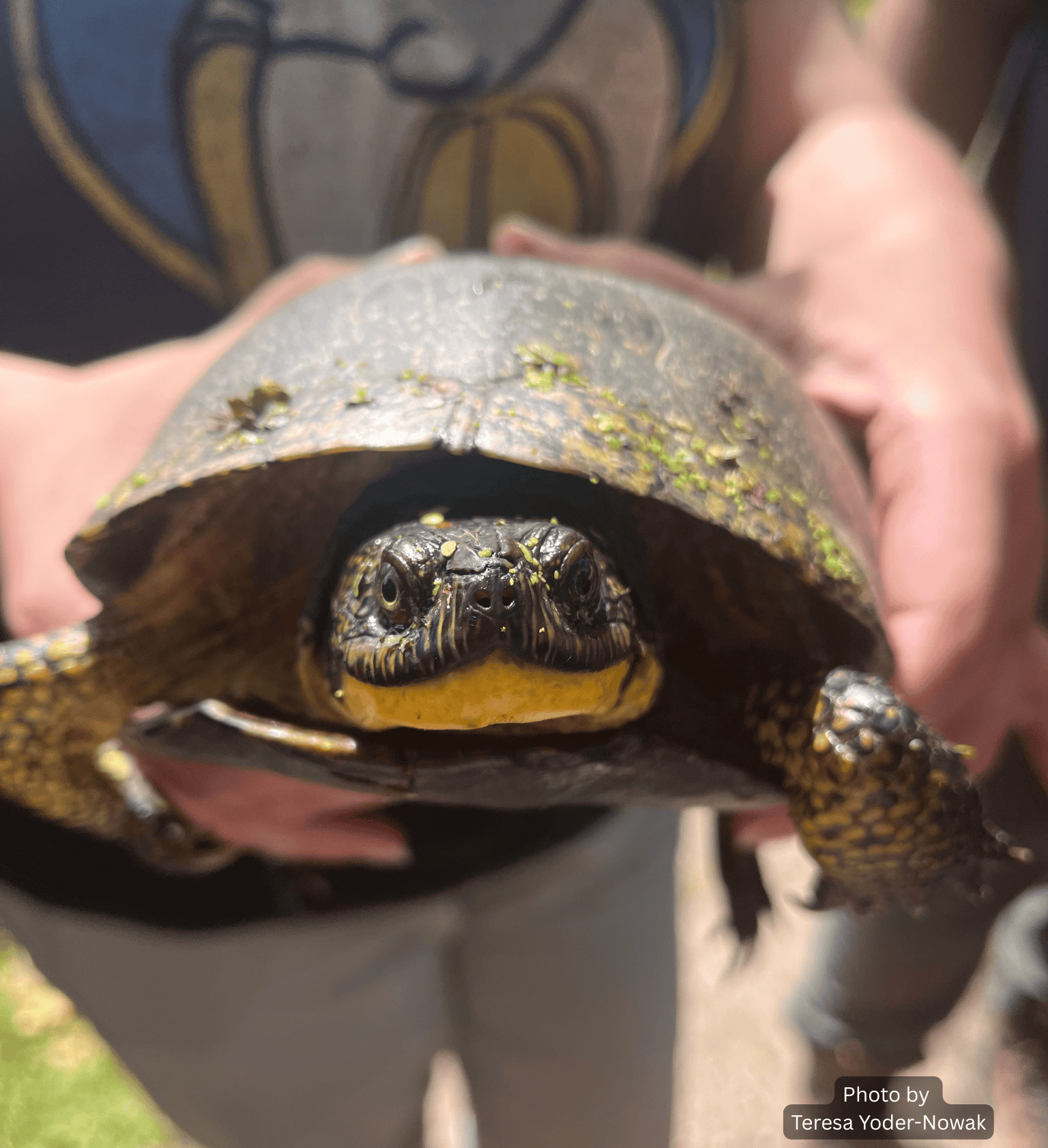
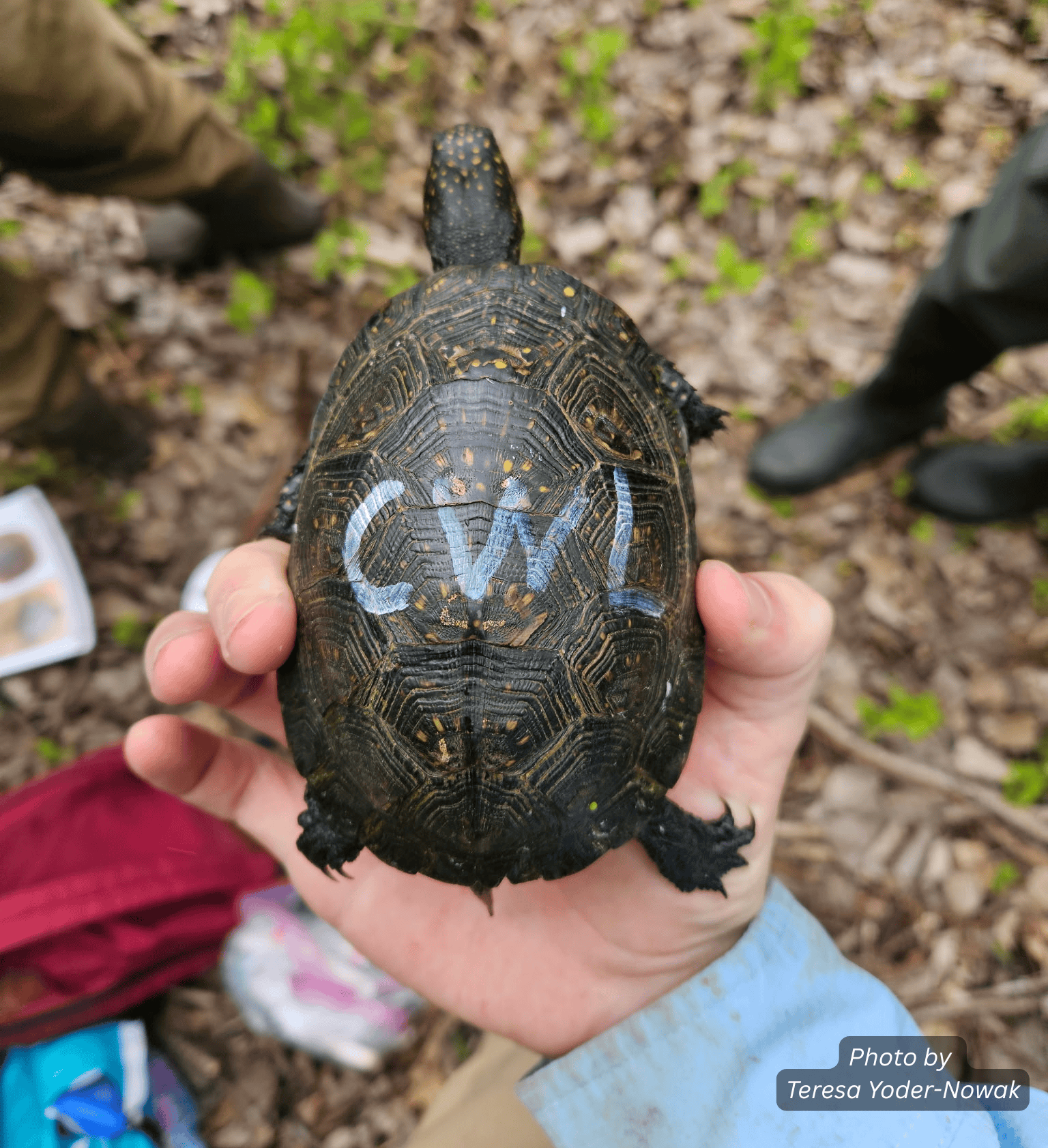
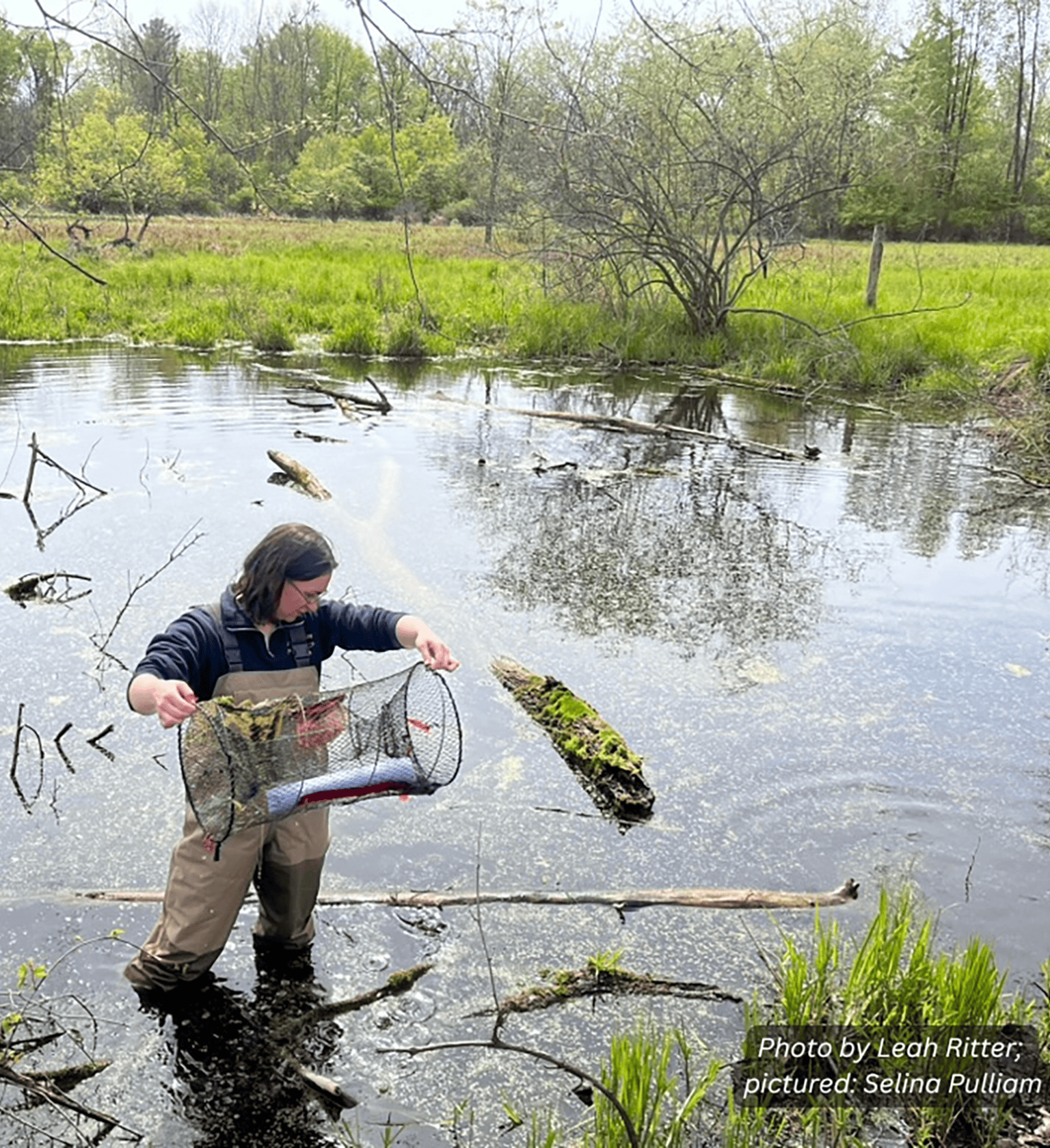
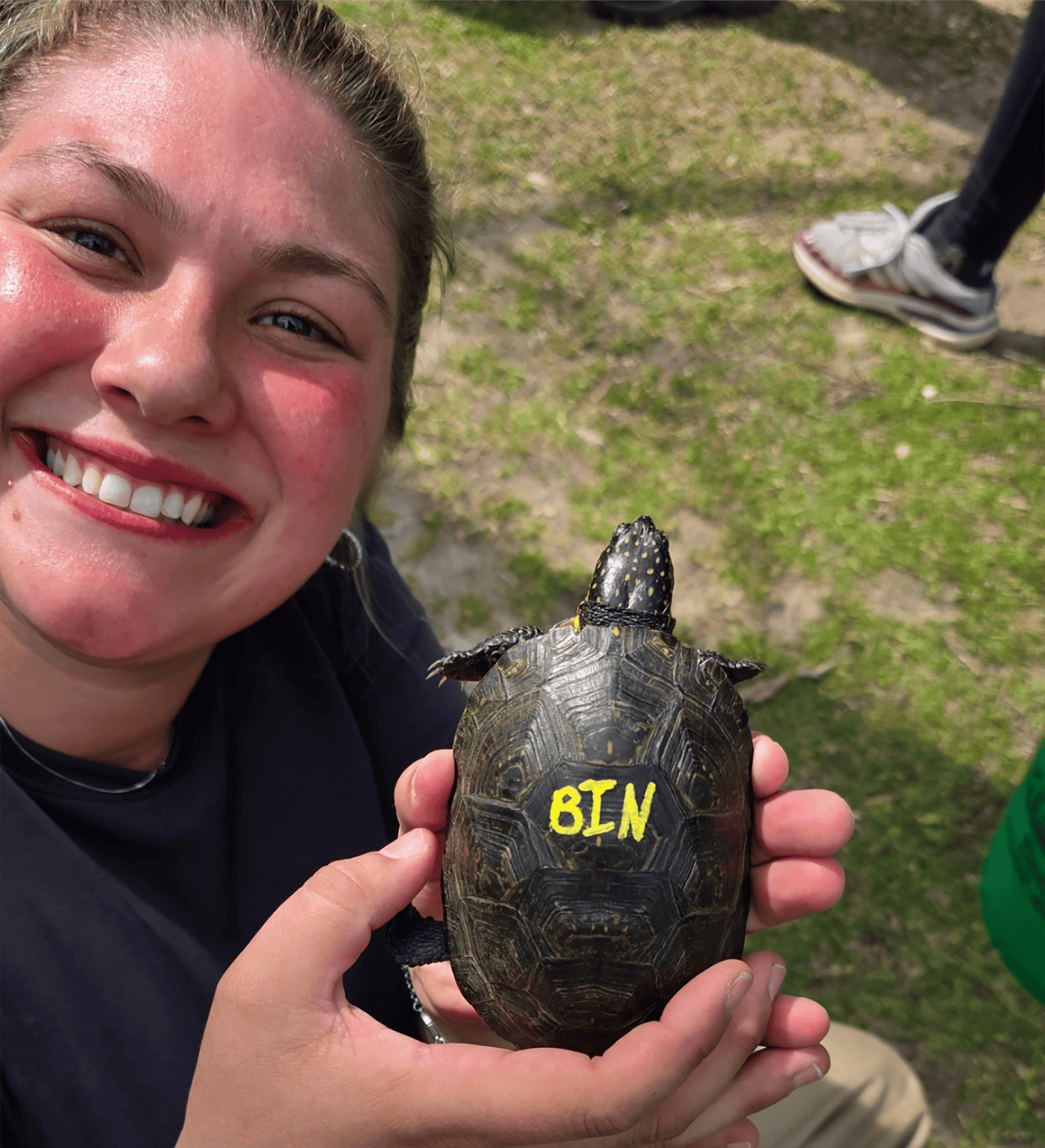
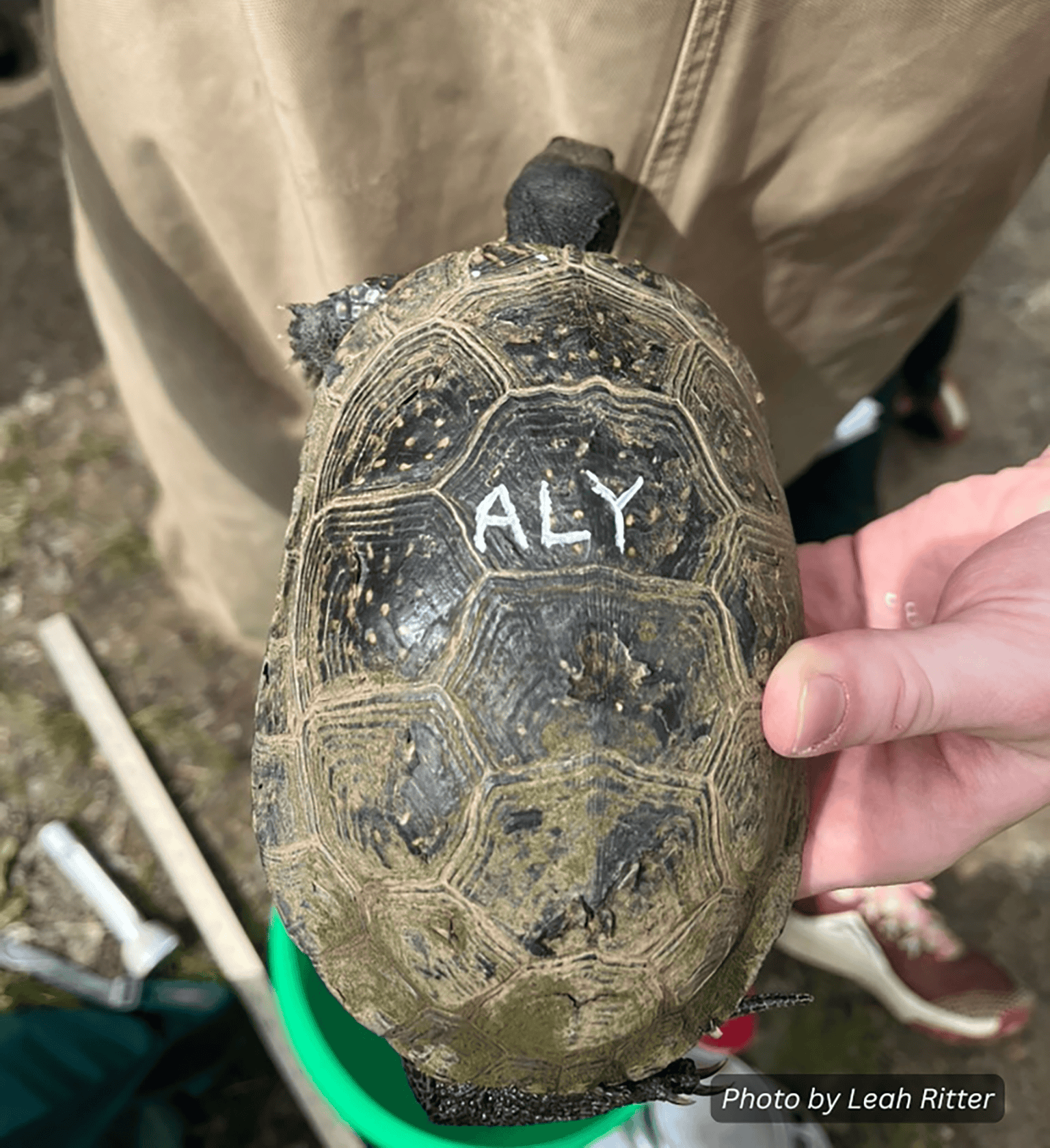
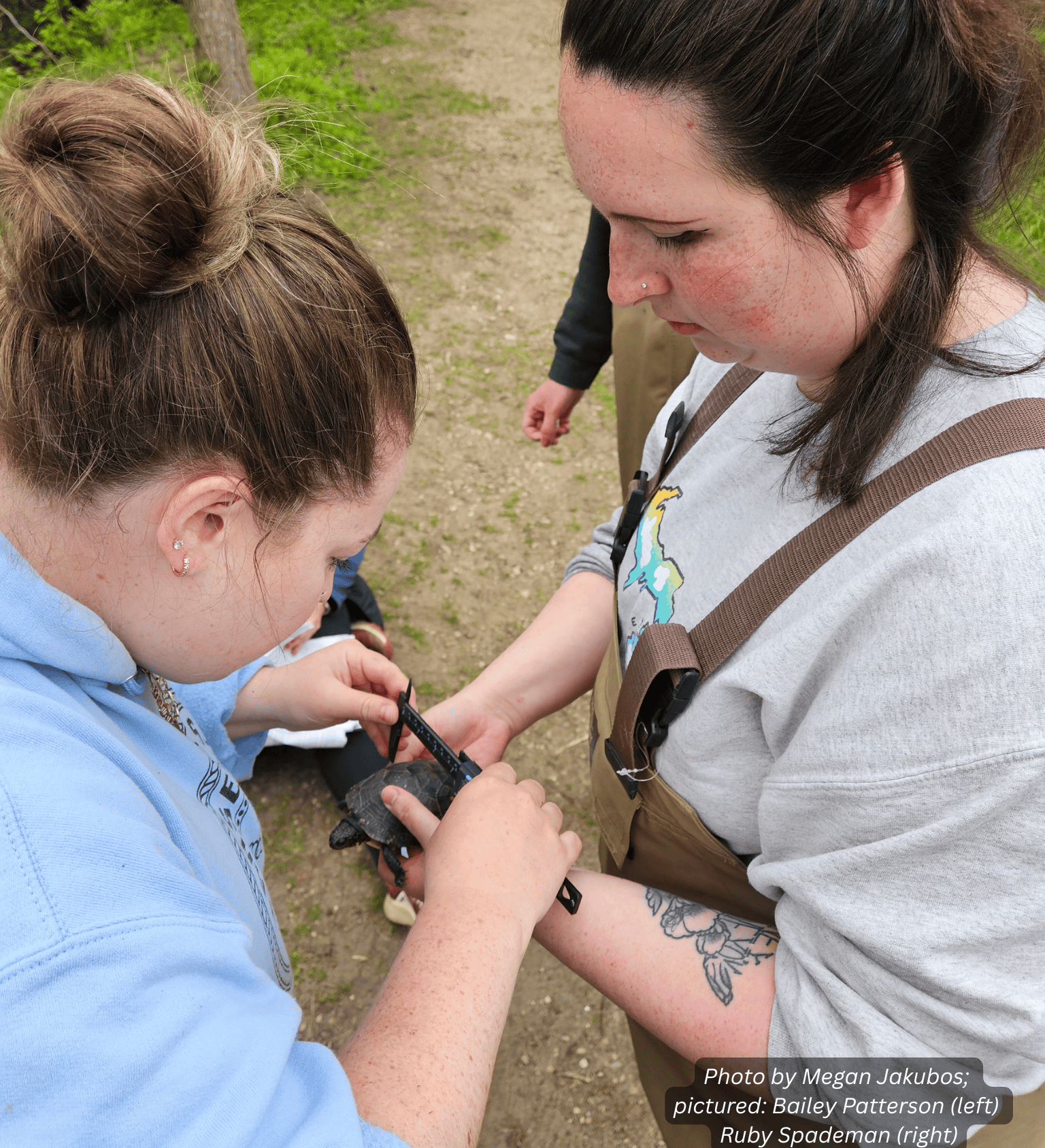
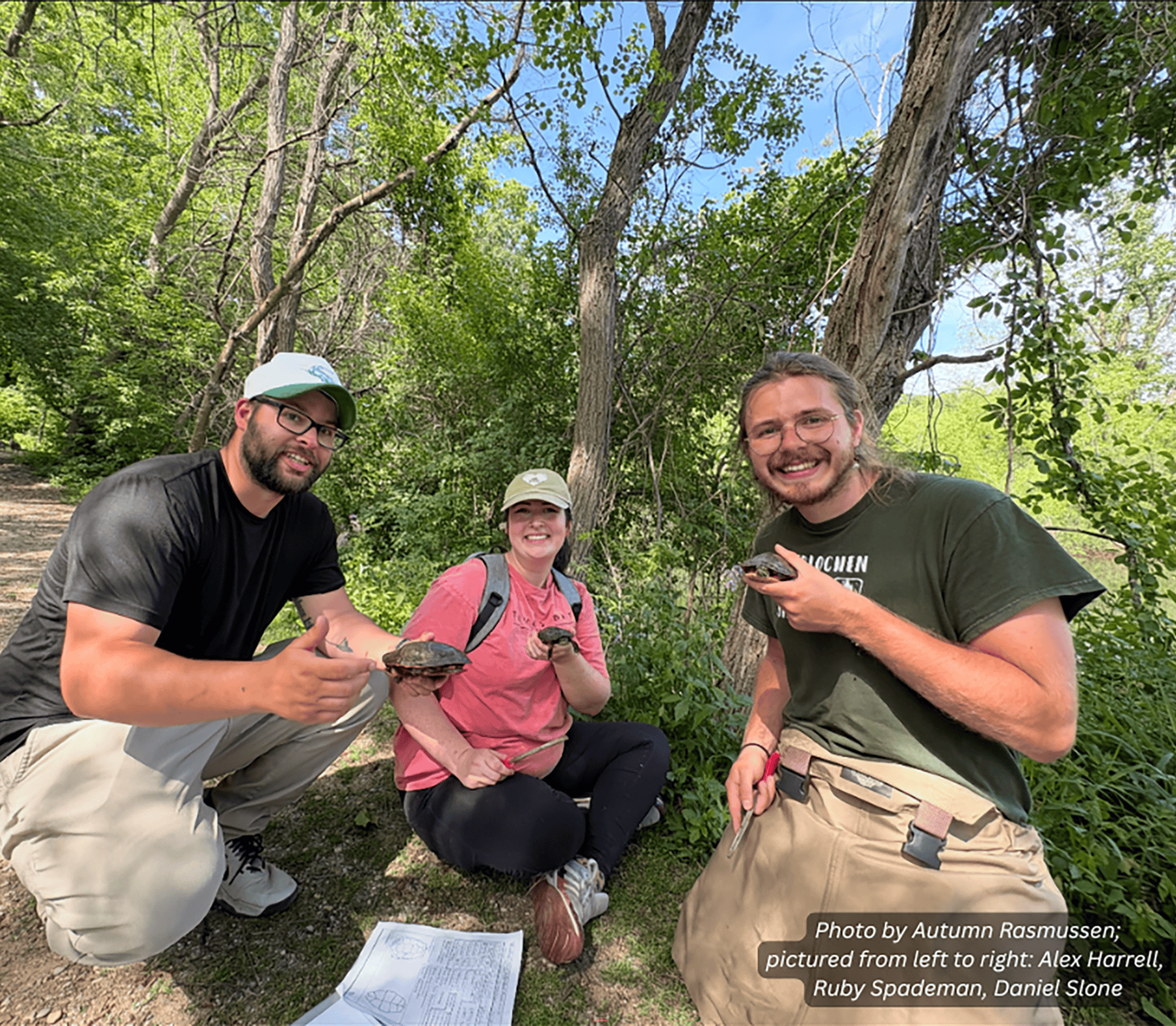
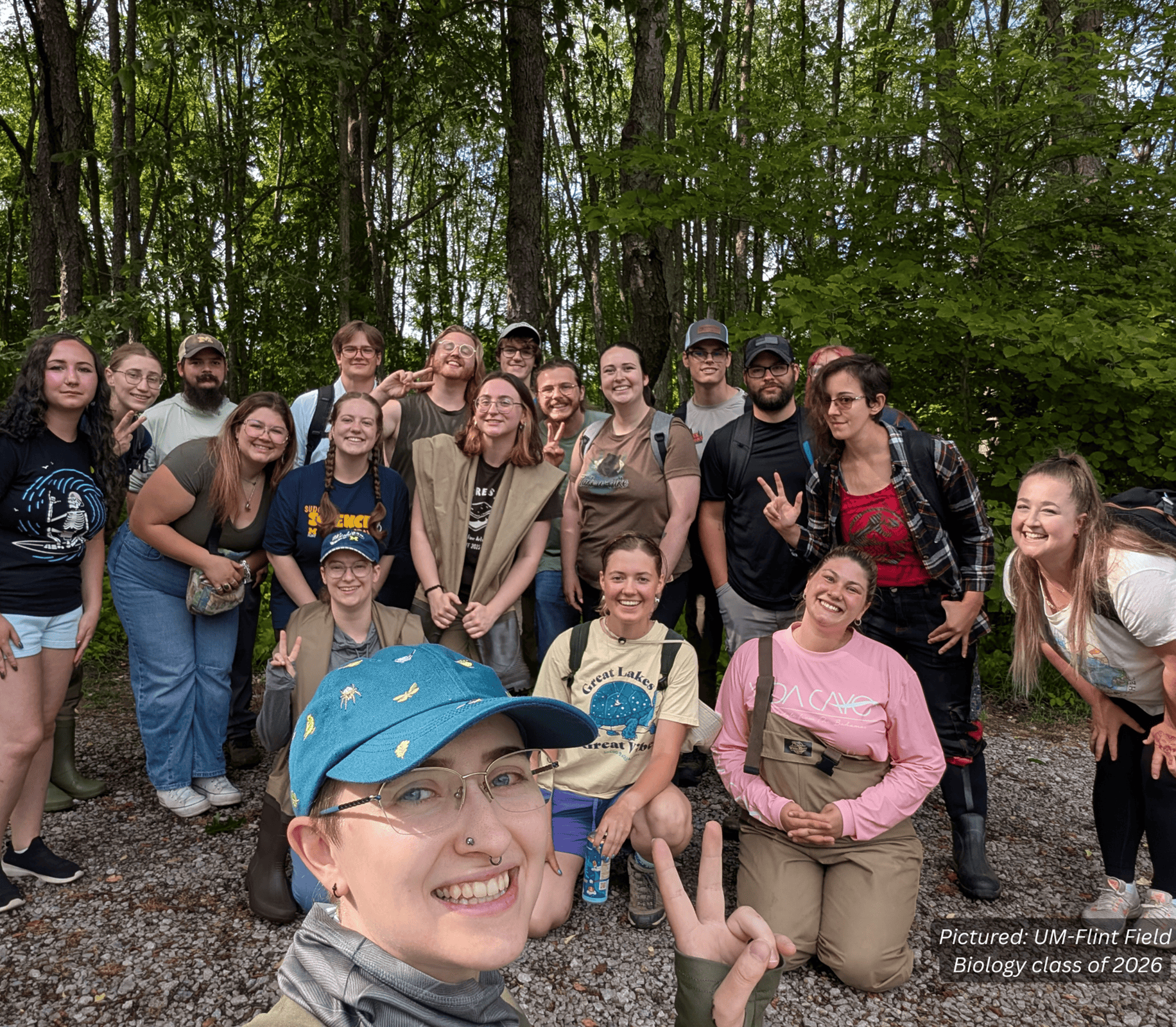
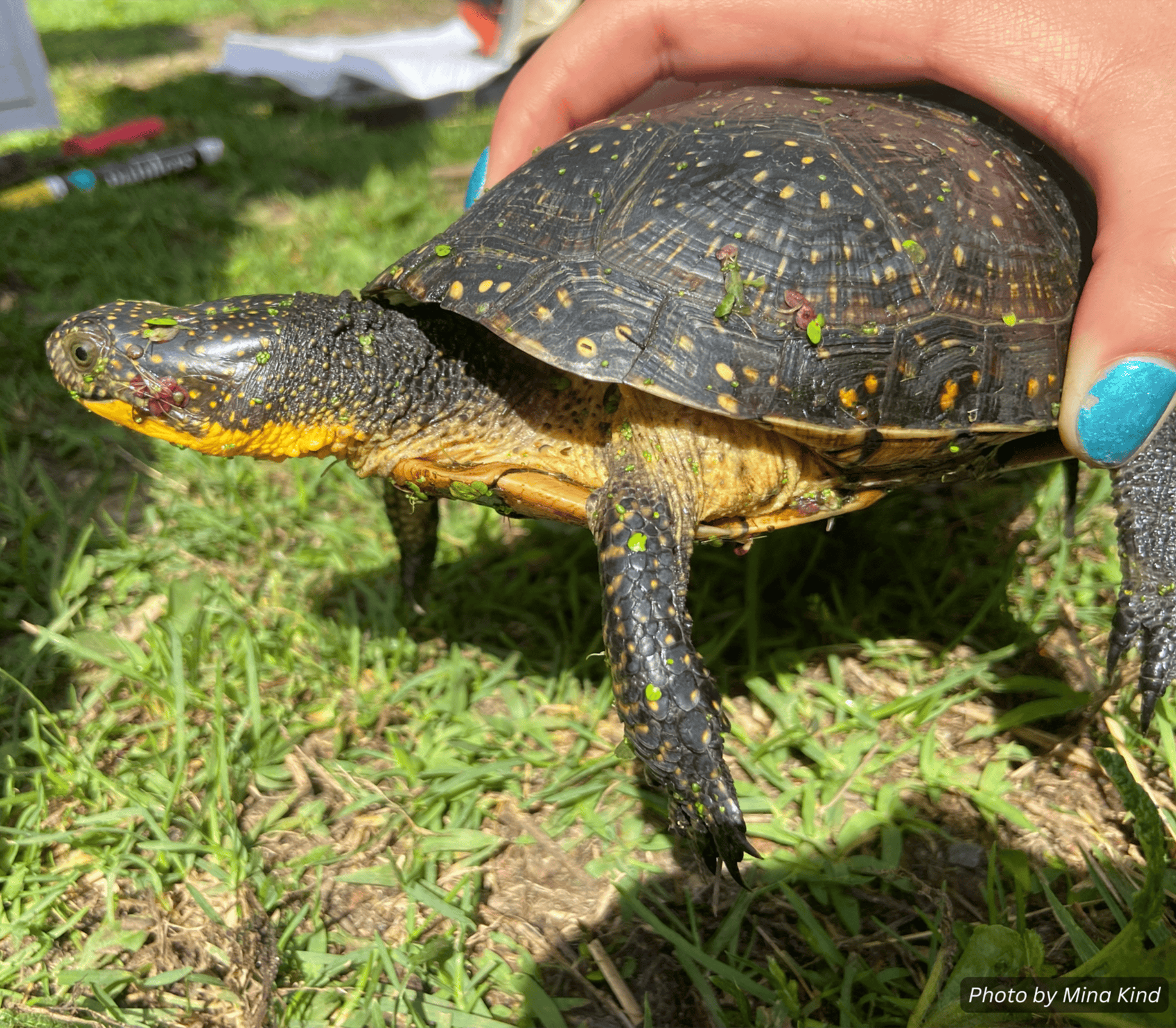
Blanding’s turtles are native to the Great Lakes region and surrounding areas, such as New England and Southeast Canada. They are easily recognized by their long necks and bright yellow throats, which often look like they are smiling. Their carapace (upper shell) is dark and dome-shaped, with distinctive yellow spots. In partnership with University of Michigan-Flint Field Biology classes, For-Mar Nature Preserve has been conducting research to monitor Blanding’s turtles in their natural habitat. This research helps scientists better understand local populations and supports conservation efforts for this threatened species.


TURTLES OF FOR-MAR
The three main turtle species you might encounter when exploring the wetlands of For-Mar are the painted turtle, the snapping turtle, and the Blanding’s turtle.
Painted turtles are the most common turtle at For-Mar. On a sunny day you might even see dozens of them out basking at the same time! A great place to look for painted turtles is in the Duckweed Pond, just left of the Groundwater Pond on the For-Mar map. They can be identified by the yellow stripes on their head and neck and their smooth dark shell. Here’s a photo of a painted turtle from For-Mar waving hello!


The next most common turtle you might find at For-Mar is the snapping turtle. These turtles can get very big and like to spend a lot of time at the Groundwater Pond at For-Mar. They can be identified by their sharp hooked beaks and very long tails. Keep your distance if you encounter one of these turtles in the wild, their bites can hurt! This is a photo of a female snapping turtle laying her eggs at For-Mar!
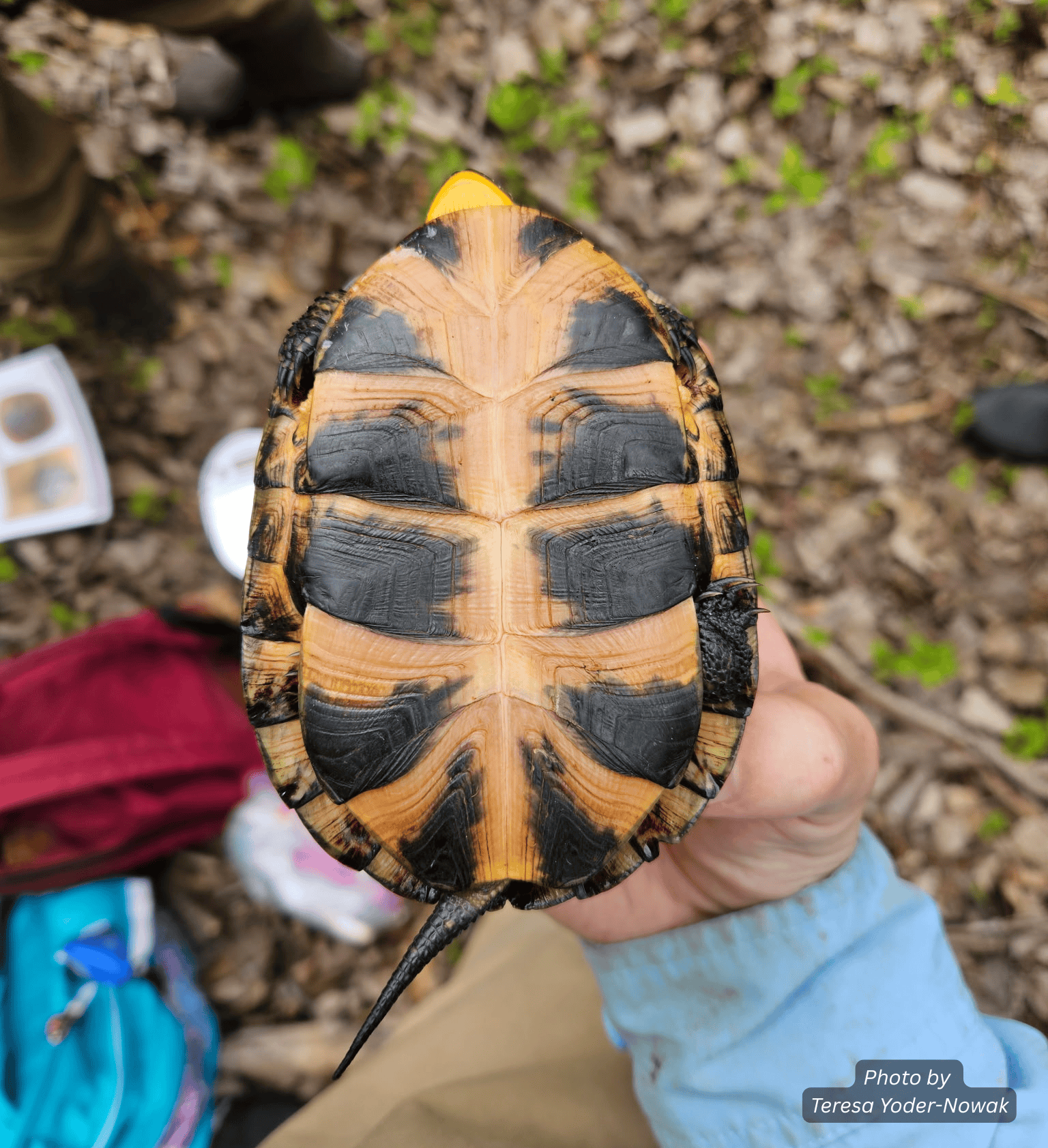
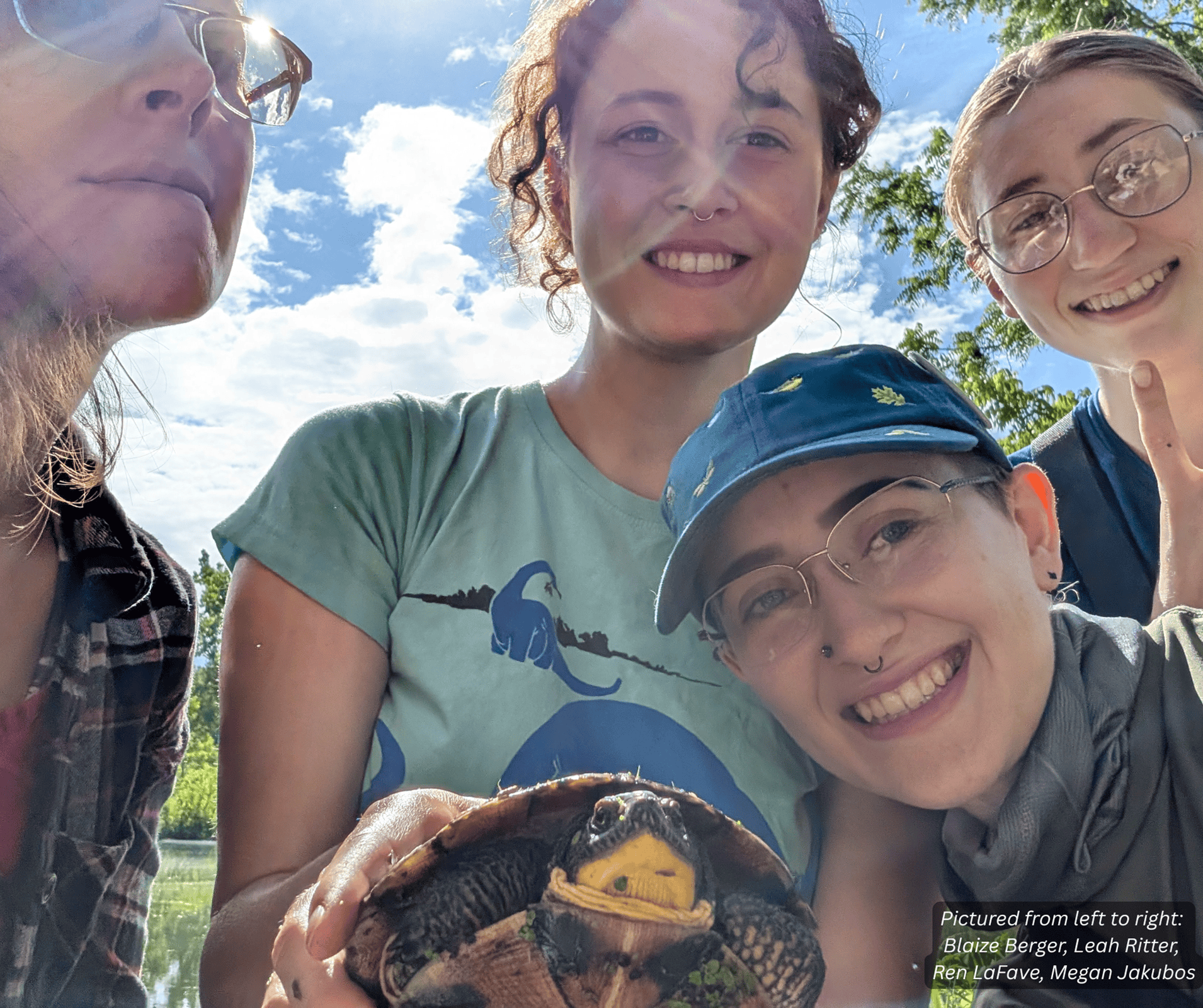
The other main turtle species you could find at For-Mar are Blanding’s turtles, a species of special concern in Michigan. They can be identified by their bright yellow necks and dark shell with small light-colored spots all over it. When they are active, they can most often be seen at the Vernal Pool, located north of the Groundwater Pond across the rickety bridge (between trail markers 26 and 27 on the For-Mar map). To the right is a photo of one a Blanding’s turtle found by researchers at For-Mar in June 2026!


There are ten species of turtles found in Michigan, if you want to learn more about Blanding’s turtles or the other turtles found here, visit the DNR page about turtles for more information!
IMPORTANT!
- Do NOT take wild turtles from For-Mar (or elsewhere) to keep as pets. Blanding’s Turtles are a protected species in Michigan, and as of April 2025, they are protected under the DNR Fisheries Order 224.25 – meaning it is illegal to kill, trap, possess, buy, sell, or take from the wild, including their eggs, without specific permits and permission. [3]
- For-Mar does NOT take in unwanted pet turtles and does NOT allow any animals to be released in the park including turtles.
- For-Mar does NOT allow feeding wildlife in the park and does not recommend feeding turtles anywhere in the wild.
DON’T TRY THIS AT HOME!
Remember – students conducting this research are trained and supervised by professionals which have the proper permits to handle the turtles. If you come across any turtles in the park or elsewhere, do NOT attempt to handle or otherwise interfere with the turtles unless they are in immediate danger, such as being in a roadway. If you assist a turtle across a road, move it in the direction it was already traveling. Always wash your hands after handling any wildlife, especially turtles.
REPORT BLANDING’S TURTLE SIGHTINGS
See a turtle? Report Blanding’s turtle sightings to the following organizations:
• Michigan Natural Features Inventory Rare Species Report –
https://mnfi.anr.msu.edu/species/report
• MDNR Eyes in the Field –
https://hub.arcgis.com/datasets/e3a5555fee1e45df8c9f2db7023d6140
• Michigan Herp (Herpetology) Atlas – https://miherpatlas.org
OTHER BLANDING’S TURTLE
PROJECTS AT FOR-MAR!
Interested in a Blanding’s turtle print-out to share and help spread awareness? Check out this flyer, also available in the For-Mar Nature Center!
Check out our Blanding’s turtle social media posts for more turtle content!
Visit our Blanding’s turtle mural and turtle tank located in the For-Mar Nature Center to learn more about this unique species!
COMING SOON



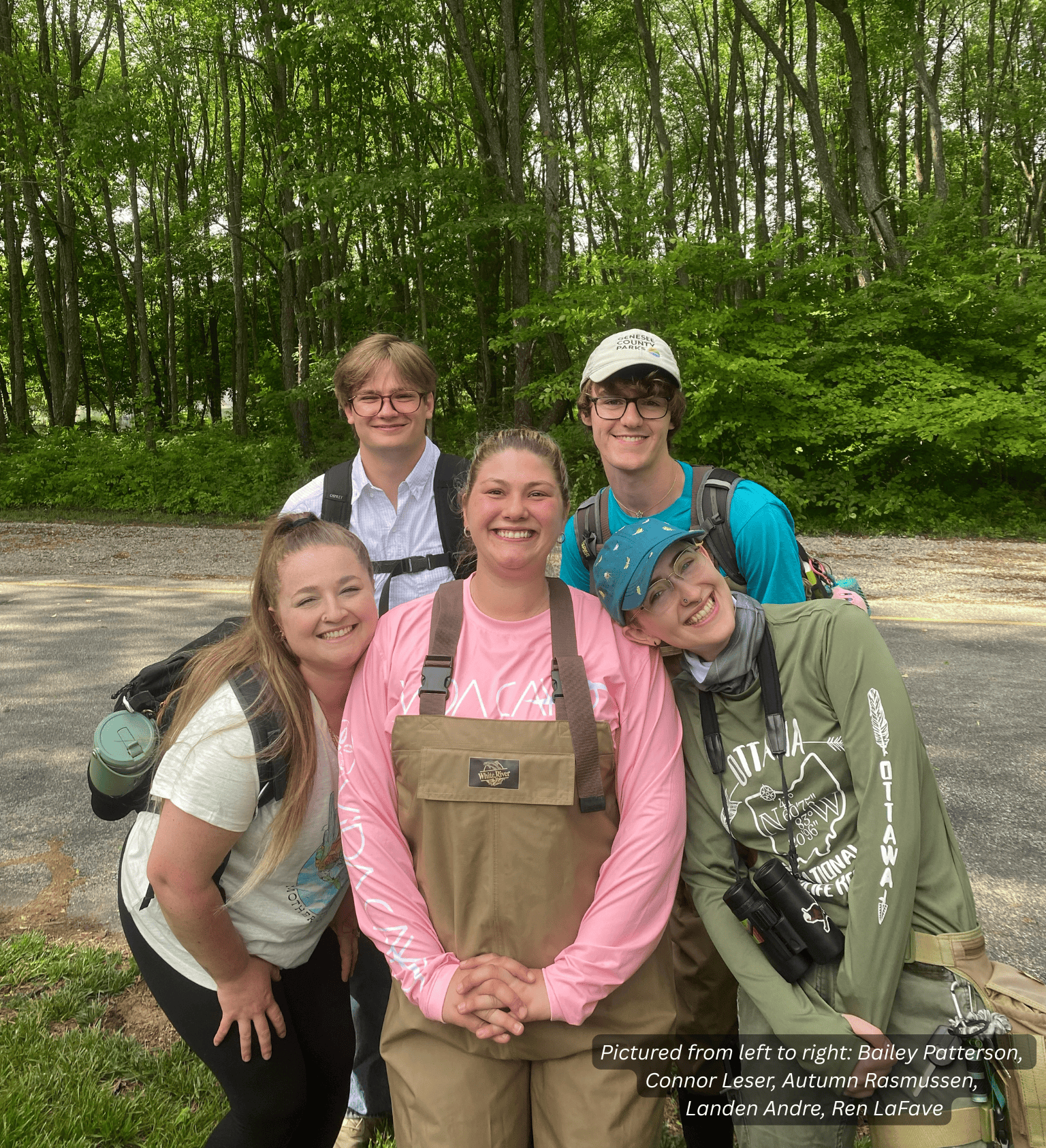
2026 Field Biology Project. Created by Bailey Patterson, Ren LaFave, Autumn Rasmussen, Landen Andre, and Connor Leser
REFERENCES:
[1] Nagle, Roy D, et al. “A Simple and Reliable System for Marking Hard-Shelled
Turtles: The North American Code.” Herpetological Review, Vol. 48, no. 2, 22 June
2017, pp. 327–330, www.researchgate.net/publication/317780325_A_simple_and_reliable_system_for_mar king_hard-shelled_turtles_The_North_American_Code. Accessed 7 June 2026.
[2] Silvy, Nova J. The Wildlife Techniques Manual. Vol. 1: Research, Baltimore, Md., Johns Hopkins University Press, 1 Mar. 2012, pp. 435–487.
[3] Natural Resources Commission and the Department of Natural Resources. Regulations on the Take of Reptiles and Amphibians. 12 Sept. 2024, www.michigan.gov/dnr/-/media/Project/Websites/dnr/Documents/Orders/Fish-Orders/FO _224.pdf?rev=7152dfabdea440ba914f0f354e23cabe&hash=5B6E83BCC089BB3AF9D 02A43FF874BFE. Accessed 7 June 2026.
Explore For-Mar

Nature Preserve

Field Trips

Gardens

Barrier Free Treehouse

Sugar Shack

Visitor’s Center

Apiary

Arboretum

Butterfly House

Outreach